Protect What Matters. Preserve What Lasts.
A plan that protects your family, reflects your values, and ensures your wealth transfers as you intend. More than documents: a strategy that does what you actually want it to do.
What Estate Planning Is Really About
The most valuable part of estate planning is not the technical structure. It is the clarity of intent and the communication that makes it real. We help families articulate what they want their wealth to accomplish, build a plan that reflects those values, and align the legal, financial, and family dimensions so everything works together.
One of the most important questions we help clients answer is: how much can I give away during my lifetime while ensuring I still have enough to cover my own future healthcare and long-term care needs? We model this carefully, building a plan that lets you give generously today without compromising your security tomorrow.

What Estate & Legacy Planning Covers
FAMILY WEALTH COMMUNICATION:
ESTATE PLAN STRATEGY:
TRUST STRATEGY:
ESTATE TAX PLANNING:
CHARITABLE GIVING:
TAX-EFFICIENT WEALTH TRANSFER:
BENEFICIARY DESIGNATION AND ACCOUNT TITLING ALIGNMENT
LIFETIME GIFTING STRATEGY:
REGULAR PLAN REVIEWS:
Start The Conversation About Your Legacy
Estate planning is about more than documents. Together, we’ll help create a plan that protects your family, preserves your intentions, and gives you confidence that your legacy will be carried forward the way you envision.
Charitable Giving
Giving that reflects your values and makes financial sense.
We help clients build charitable strategies that are both meaningful and tax-efficient:
DONOR-ADVISED FUNDS (DAFS):
Contribute now for an immediate deduction, distribute to charities over time on your own timeline
CHARITABLE LEAD TRUSTS (CLTS):
Provide income to charity first, then pass assets to your family
QUALIFIED CHARITABLE DISTRIBUTIONS (QCDS):
Transfer funds directly from an IRA to a qualifying charity, satisfying RMD requirements without triggering taxable income
PRIVATE FOUNDATIONS:
For families who want a lasting charitable vehicle that carries family values forward
CHARITABLE REMAINDER TRUSTS (CRTS):
Provide income during your lifetime, with the remainder going to charity
SUSTAINABLE SPENDING ANALYSIS:
Understanding what your wealth can support with confidence
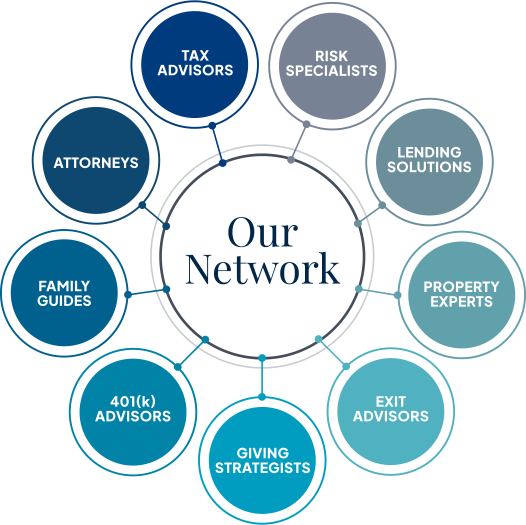
Our Network
Estate attorneys whose expertise fits what each situation actually requires.
We work with your existing estate attorney or introduce you to one from our network whose depth and approach match what your situation demands. The right attorney for a straightforward estate is a different professional from the one needed for a complex, multi-entity, multi-state situation. We make that match carefully, based on firsthand knowledge of their work.
FAQs
Q: Do you draft wills or trusts?
A: No. We provide estate planning strategy and work alongside your estate attorney to ensure your legal documents and financial plan are fully aligned.
Q: What is a donor-advised fund?
A: A donor-advised fund (DAF) is a charitable giving vehicle that lets you make a contribution, receive an immediate tax deduction, and distribute gifts to qualifying charities over time. We integrate DAFs into your overall tax and giving strategy.
Q: What is a qualified charitable distribution?
A: A qualified charitable distribution (QCD) allows individuals age 70½ or older to transfer up to $105,000 annually directly from an IRA to a qualifying charity. The distribution satisfies RMD requirements without counting as taxable income.
Q: When does a private foundation make sense?
A: A private foundation makes sense when a family wants a structured, lasting charitable vehicle that can operate across generations and reflect shared family values. We help evaluate whether a foundation, a DAF, or another vehicle is the right fit for your goals.
Q: How much can I give away while still protecting my own financial security?
A: This is one of the most important questions in estate planning, and we model it carefully. We project your future healthcare and long-term care costs, income needs, and financial plan to determine how much you can give during your lifetime while maintaining the security you need.
Q: How often should I review my estate plan?
A: At minimum every three to five years, and whenever there is a significant life event, major wealth change, or relevant shift in tax law.
Q: Where are your clients located?
A: We serve clients in Austin, across Texas, and nationally.
Insights
Clear thinking for complex financial decisions.