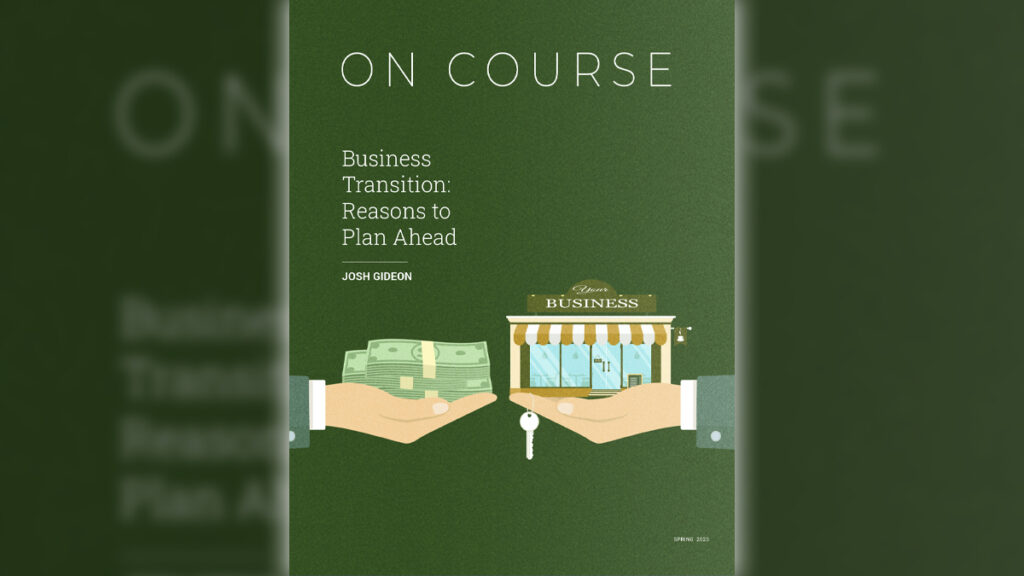
Business Owners & Executives
Whether you have spent decades building a company of your own or years building wealth through equity compensation at a public company, your financial life is deeply tied to your professional life in ways that require a different kind of coordination. We work at that intersection every day.
Business Owners
Your business is part of your financial plan. We treat it that way.
Business owners face a challenge most advisors underestimate. Company value, personal liquidity, retirement planning, estate strategy, and tax efficiency are all connected. We bring all of it into one plan.
OUR 5-PHASE BUSINESS EXIT PROGRAM
Exiting your business is more than a transaction. It is a transformation. Our True Wealth Management™ approach integrates your exit with your personal financial life. As a fee-only fiduciary, we build and lead the advisory team around you: CPAs, attorneys, M&A specialists, and business consultants, with your interests at the center.
The decisions made years before a sale often have the greatest impact on the outcome. Starting early creates options. Waiting limits them.
PHASE 1: PRE-TRANSITION PLANNING
PHASE 2: EXIT STRATEGY DEVELOPMENT
We evaluate exit options — sale, succession, internal transfer, ESOP — and model the tax and cash flow impact of each path. We build a custom timeline and action plan based on your goals and the market environment.
PHASE 3: LIQUIDITY EVENT NAVIGATION
Before the transaction: estate structures, capital gains planning, and investment preparation so you are ready to receive and protect new liquidity.
PHASE 4: POST-SALE WEALTH MANAGEMENT
We apply our True Wealth Management™ framework to your new wealth structure: tax-efficient income planning, family wealth transfer strategy, and personal goal realignment.
Phase 5: Ongoing Advisory & Oversight
We remain your financial partner, adjusting your plan, managing investments, and leading your advisory team as your needs evolve.
Executives
Your compensation is more than a salary. We help you make the most of it.
Senior executives accumulate wealth through equity compensation, deferred programs, and company benefits that create significant opportunity and real complexity. We treat these not as line items but as a coordination challenge requiring tax planning, diversification strategy, and portfolio integration.
RSUS: THE MOST COMMON EQUITY CHALLENGE WE SEE
Restricted Stock Units create two problems at once: a tax planning problem and a concentration problem. When RSUs vest, they are taxed as ordinary income, and without a proactive strategy, withholding is rarely sufficient. Many executives also hold vested shares well past the vesting date, accumulating a position that represents a growing share of their net worth. That concentration carries more risk than most people realize until markets move.
We address three things simultaneously:
- Tax planning around the W-2 income created as RSUs vest each year
- Capital gains strategy for shares held after vesting
- Portfolio-level risk analysis that incorporates your company stock across your full wealth picture
Other executive compensation we structure
- Non-qualified stock options (NQSOs): timing exercise decisions around tax impact and concentration
- Incentive stock options (ISOs): managing AMT exposure and holding period strategy
- Non-qualified deferred compensation (NQDC): distribution timing and tax planning
- 10b5-1 plans: rule-compliant systematic sale programs for executives with defined trading windows
- Limited selling windows: we build the full strategy in advance so you are ready to act the moment the window opens
- Pension and lump-sum buyout decisions: modeling lifetime value vs. lump sum across rate and longevity assumptions
- Executive benefits: ensuring your complete benefits picture is integrated into your overall financial plan
Our Network
The professionals business owners and executives need most.

CPAs who understand equity compensation and business transactions. M&A advisors with hands-on deal experience. Estate attorneys whose expertise is matched to what each situation actually requires. And investment managers running institutional strategies unavailable through retail channels.
One client assumed his business had no meaningful value when he retired — his name was on the door and there were no formal client contracts. We introduced him to a business broker who saw things differently. The broker identified real, transferable value and negotiated a sale that far exceeded the client’s expectations.
FAQs
Q: How do you help with a business exit?
A: Our 5-phase Business Exit Program begins well before the transaction with a personal and business readiness assessment, then builds through tax structure planning, exit strategy, liquidity event navigation, and post-sale wealth management.
Q: What should I do with my RSUs?
A: RSU planning addresses three things: the ordinary income tax when they vest, the capital gains strategy for shares you continue to hold, and how that position fits your overall risk picture across your full balance sheet.
Q: What if my exit is years away?
A: That is the best time to start. Early planning creates the most options. Most of the value in exit planning comes from decisions made long before a transaction.
Q: How do you work with executives who have limited selling windows?
A: We build the complete strategy in advance so you are ready to act when the window opens. Every tax, diversification, and timing decision is structured ahead of time.
Q: How are you compensated?
A: Fee-only means we are compensated solely by advisory fees paid by you. We receive no commissions, no product payments, and no referral fees.
Q: Where are your clients located?
A: We serve clients in Austin, across Texas, nationally, and internationally.
Insights
Clear thinking for complex financial decisions.

Business & Exit Planning

Business & Exit Planning